
On Sunday 19 September 1779, in the church of Sappemeer, Hindrikje Luitjes from Sappemeer married a man who appears in the marriage register as “Louis Allons van Curacao”.1 The same day their little daughter was baptised. She had been born earlier, and so her baptism was not entered in the ordinary baptismal register but on a separate page for children who had been “in onegte gewonnen” [born out of wedlock]. There the minister wrote:
Susanna een Dogter in onegte gewonnen van Hindrikje Lüitjes, de Vader daer van zeÿde zÿ te zÿn Louis Aalons een Neger uÿt Curacao, die dit ook beleeden & haer getrouwt heeft.2

It is a short entry, but it says a great deal. An unmarried mother named the father, the father acknowledged the child, and the couple married. In a Groningen village congregation that was not unusual. What is unusual is the way the father is described. In the marriage register he is someone “van Curacao”, just as others are “van Hoogezand” or “van Veendam”. At the baptism he is “een Neger”. It is the only time in the surviving registers that his skin colour is mentioned, and it is the first source that shows Louis as a Black man in Sappemeer, with a Groningen wife and a child.3
Who was this Louis, and how did he come to be in Sappemeer? He himself left nothing on paper: there is no letter, no statement, no account in his own words. What we know of him is found in the papers of others: of the family that owned him, of ministers and officials, of a judge and a land-registry clerk. From those documents a life can be reconstructed that began on Curaçao, more than twenty years before that Sunday in Sappemeer.
Louis was born on Curaçao around 1755. We know the year only approximately: at his death in 1831 the official in Sappemeer recorded that he was 76 years old and “geboren te Curacao in de Westindien”.4 About his father the sources are silent. His mother was called Sambo, his grandmother Babbetje. Both were enslaved, and so Louis was too, from birth.

.jpg)
We know this from a will. On 2 August 1757 Maria Klingenburgh, widow of Jan Kock, had her last will drawn up on Curaçao. In it she left to her granddaughter Maria Kock:
een Negerin Babbetje, beneffens haare dogter Sambo en deszelfs Zoon Louis en dogter Sebel, en een [Vissers] Jonge Gaspaar; midsgaders een Malogni Cabinet, met al wat ‘er op staat, en een Zilver Lampet en Schotel.5
Louis was then at most two or so. In a single sentence he appears with his grandmother, his mother and his sister Sebel, between a mahogany cabinet and a silver ewer. The same will shows that things could have been different. Maria Klingenburgh stipulated that two women of her household, Maria Magdalena and Dionora, would on her death be released “van alle Slaafsche Dienst”, and that the smith Abraham would go free if he paid 500 pesos. For Babbetje and her descendants she made no such provision. They passed to the next generation.5
That next generation was Maria Kock, born on Curaçao in 1741 as the daughter of Willem Webb Kock and Catharina Decker.6 She was married to Lieutenant Arnold Padtbrugge, who in 1758 bought the Rozetak plantation, by the Schottegat behind Willemstad.7 Padtbrugge died between early 1759 and late 1760; Maria was not yet twenty.8 Louis and his family probably lived in her household at Rozetak, but that is not certain.
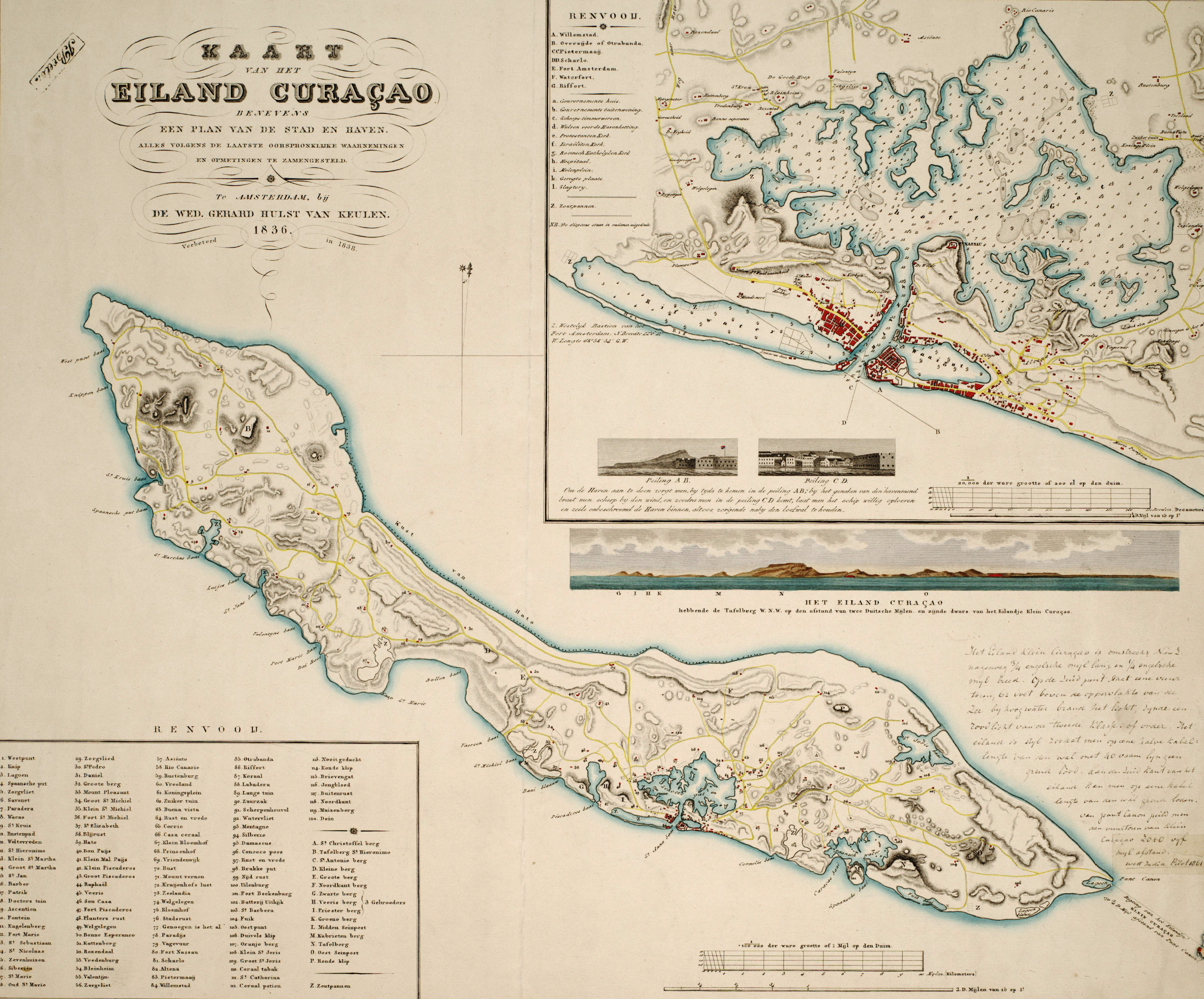

In 1764 the young widow remarried, to Cornelis Star Lichtenvoort, a Groningen lawyer who worked as an advocate on Curaçao.9 Maria’s mother Catharina Decker was also part of the household: in 1765 mother, daughter and son-in-law recorded that they would manage their property jointly.10 Louis worked in this household as an enslaved domestic servant.11
His mother Sambo was also called Susanna. That is her name in the letters Star Lichtenvoort later wrote about her.12 When Louis had his first daughter baptised in Sappemeer in 1779, he named her Susanna. Perhaps he named her after his mother, whom by then he had not seen for ten years. He also had a sister, Anna. She does not yet appear in the will of 1757 and was therefore probably born later. With her and with their mother Louis would make the crossing to Europe in 1766.
In 1766 Cornelis and Maria sold the Rozetak plantation to Adriana Raphoen, widow of Dirk van Uytrecht.13 The enslaved people who belonged to the plantation passed with the sale to the new owner. Louis and his family were not among them: they were Maria’s property, and stayed with her.14
The couple decided to go to Groningen. On 28 July 1766 the ship Vrouwe Anna, under Captain Jan Molenhouwer, sailed from Curaçao, and on 23 October it arrived at Texel.15 On board were Cornelis, Maria, her mother Catharina Decker and three of the people they owned: Louis, his mother Sambo and his sister Anna.16 Grandmother Babbetje stayed behind on Curaçao, as did other children of Sambo.17 Louis was about eleven.

A month later they were in Amsterdam. On 22 November 1766 Catharina Decker and the couple arranged before a notary how they would continue their household. They had “nu onlangs van Curaçao alhier gearriveert” [recently arrived here from Curaçao] and would go to Groningen “met den eersten” [at the first opportunity].6 About the three people they had brought with them, the deed says nothing.

Their destination was Welgelegen, a peat-colony manor in Kleinemeer near Sappemeer, which Cornelis’s father Wilhelmus Lichtenvoort had acquired in the 1740s.18 In June 1768 Cornelis, Maria and Catharina Decker registered with the church of Sappemeer by certificate of membership, “tzamen van Curacao”. In October of that year their first child was baptised there.19


For Sambo and Anna it remained a short stay. According to Star Lichtenvoort they could not get used to the cold. On 1 July 1769 he wrote to the fiscal of Curaçao, Coerman:
Wij hebben geresolveert om Sambo met haar Dochter Anna te doen repatrieren … Louis zal ik by provisie noch hier houden.20
Star Lichtenvoort paid the passage of 150 guilders and gave Sambo a recommendation to take with her. To Captain Pieter Hanson, who was to take them to Curaçao, he wrote a covering letter. The ship left at the beginning of October 1769.2021
The decision is set down in the enslaver’s words: “wij hebben geresolveert”. Whether Sambo wanted to return to her mother and her other children, whether Louis wanted to stay, and whether anyone asked them, is not recorded. Another letter does show that the ties with Curaçao continued: Star Lichtenvoort sent over a small chest of meat, with “een Stuk Spek voor Babbetje en Martha” [a piece of bacon for Babbetje and Martha] and “een pakje linnengoed voor de kinderen van Sambo” [a parcel of linen for Sambo’s children].17 Sambo returned to a family she had not seen for three years. Louis, about fourteen, stayed behind alone in Kleinemeer, “by provisie”: for the time being. That “for the time being” would last the rest of his life.
Whether Sambo and Anna returned to Curaçao as free women is not certain. The letters speak of “repatrieren” and “recommandeeren”, not of manumission.22 No letter of manumission has been found for Louis either. Was he still an enslaved person in Kleinemeer? In the Republic it had been held for centuries that “alle Menschen hier te Lande voor VRYE Luiden erkent en gehouden worden” [all people in this land are recognised and held to be FREE persons]. Whether that also applied to people brought over from the colonies was long unclear. Only on 23 May 1776 did the States General lay it down. Anyone who was brought over by an owner and had not been manumitted did not become free merely by arriving. The owner had to send him back within six months, or, with the court’s permission, at most six months later. Anyone still in the Republic after that was considered free and could no longer be sent back against his will.23 When the placard appeared, Louis had already been living in Kleinemeer for almost ten years. About people who had already been there that long it says nothing, and whether anyone applied it to Louis is not known. How Louis himself saw his position, we do not know.
Louis grew to adulthood in Kleinemeer. No source describes what his days were like, but his place in the household is recorded. In March 1776 a midwife in Sappemeer reported that Jantie Jans Boer from Hoogezand had given birth to a child out of wedlock. As the father Jantie named “een Lowijs zijnde de knegt van de Heer Gezworen Ligtenvoort in ‘t Kleinemeer” [a Lowijs, being the servant of Mr Gezworene Ligtenvoort at Kleinemeer].24 Louis was then about twenty. What became of this child, we do not know; no baptism has been found. In the village, then, Louis was known as “de knegt” [the servant] of Star Lichtenvoort. That word says nothing about being free or unfree: every farm had its hired men. To the outside world he was a servant, like others.

Three years later came the marriage to Hindrikje Luitjes with which this story began. After Susanna the couple had three more children: Luitje in 1781, Cornelius in 1783 and Maria in 1787.25 The first son was probably named after Hindrikje’s father. The next two children were named after Cornelis Star Lichtenvoort and Maria Kock.26 If that was Louis’s choice, it says something about his bond with the couple who owned him. But whether that bond rested on affection, on dependence or on both, the names do not tell us.
Louis was not the only Black man in the area. At the peat-colony manor Stadwijck, also in Sappemeer, lived the lawyer Jacob Appius with his servant Jan Christiaan, whom he had brought from Suriname. Jan Christiaan was baptised in Hoogezand in 1774, “oorspronkelijk afkomstig uit West-Indië” [originally from the West Indies] and twenty years old.27 The two men were about the same age and lived in the same village. Whether they knew each other has not come down to us.

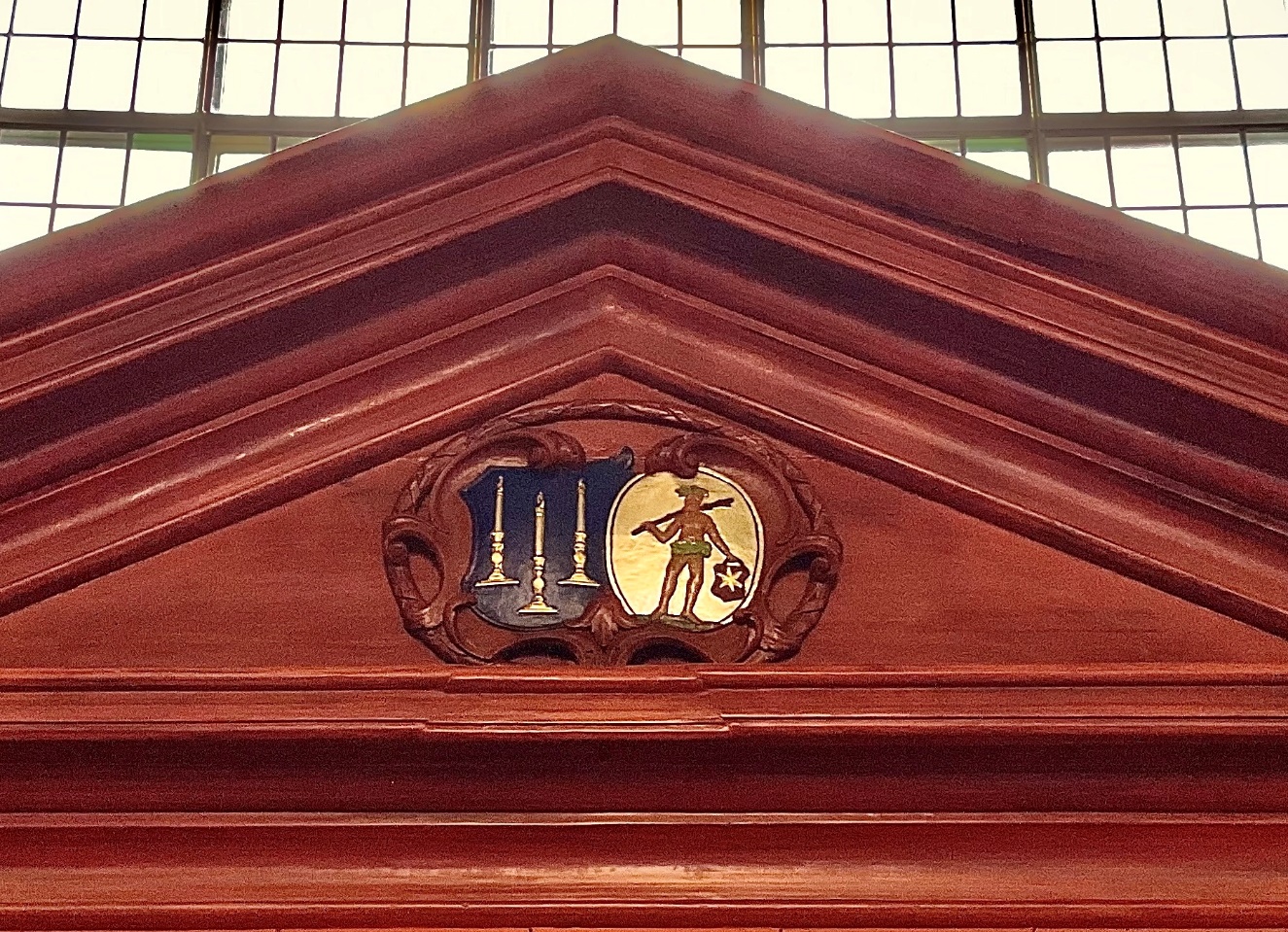
On Sundays the Star Lichtenvoort family sat in the Koepelkerk of Sappemeer, in a manorial pew bearing the arms of Star and Lichtenvoort; that pew is still there.28 Louis probably sat in the same church on many Sundays. In 1784 he made his profession of faith there and became a member of the congregation.29 In the same church Cornelis’s parents, Wilhelmus Lichtenvoort and Reynouw Gesina Star, were buried, and later Jacob Appius too.28




In the autumn of 1795 Louis turns up in high politics. The Patriots had taken power that year, and expressions of support for the ousted stadtholder were viewed with suspicion. On 27 October a company was sitting in the house of the widow Barels at Zuidlaarderveen: a doctor, a man from Kleinemeer, Roelf, the servant of an advocate from Wildervank, and “Louis en Willem beide knechten van den Syndicus Lichtenvoort” [Louis and Willem, both servants of the Syndic Lichtenvoort]. Roelf shouted “Oranje zal boven zyn” [Orange shall prevail]. Members of the Patriot drill society in Hoogezand lodged a complaint about it, and the government of Stad en Lande referred the matter to the court.30 Louis himself was not accused of anything. He appears in the source simply as one of his master’s servants, without a surname and without mention of his skin colour. Star Lichtenvoort by then also had a second servant in his employ, Willem.
Meanwhile Louis’s family grew. His daughter Susanna had a child of her own in 1795, out of wedlock. In the baptismal register she appears as “Susanna Louis”: her father’s first name became her surname in the village.31 On 30 May 1796 a “Kinds, Kind” [child’s child] of “Lowÿs Alon” was buried in Sappemeer, probably this grandchild.32 Three years later, on 8 July 1799, “Lowÿs Allons Vrouw” was buried: Hindrikje Luitjes. Louis had been married to her for twenty years.33
Louis did not remain a widower for long. On 3 November 1799 he married Maria Harms in Sappemeer; she was also known as Maria Touwslager. In the marriage register they appear as “Louis Allons Wdr van Hindrikje Lüitjes / Maria Harms beide van hier”.34 Maria had been born in the city of Groningen and was more than twenty years younger than he. She worked as a midwife.35 Together they had three children: Antje in 1800, Louisa Helena in 1802 and Jan in 1805.36 With Louisa Helena, Louis passed on his own name for the first time.
In the autumn of 1802, when Louisa Helena was a few months old, Louis was attacked on the public road in Sappemeer. On 13 October four men, Jan Franssens, Pieter Jans, Reinder Jans Nagel and Jan Roelfs, struck him with their fists, so hard that he “zwaar gebloed” heeft [bled heavily]. The offenders were fined.37 Why they attacked him is not stated in the source. His great-great-grandson F. Alons later linked it to his skin colour.38 That is quite conceivable, but cannot be proved. The case did, however, come before the court, and the court punished the offenders.
The family was not rich. Antje died in September 1808, eight years old. She was buried in Kleinemeer as “Antje Louis”, and in the register next to her name is written: “arm” [poor].39 It is the only direct trace of poor relief in the family, but it says enough: a coachman and a midwife evidently could not pay for their daughter’s funeral.
Louis remained in Star Lichtenvoort’s service. When his son Luitje married in Veendam in December 1813, and his daughter Maria in Siddeburen in February 1814, he appeared in both records as “koetzier” [coachman].40 He was then almost sixty and still drove the family’s carriages. The children of his first marriage had meanwhile left home. Susanna married the tailor Philippus Jans in 1803; Maria married Frans de Weger, a tailor from Gouda. In her marriage record she is called “Maria Lowijs”, just as Susanna was called “Susanna Louis”.41 Cornelius became a clerk in Meppel, married in Bourtange and died around 1814, about thirty years old.42 Luitje became a hatter in Sappemeer. Several grandchildren were given Louis’s name.43

In 1815 Maria Kock died, the woman to whom Louis had been bequeathed as a child in 1757. In April 1820 Cornelis Star Lichtenvoort, by then 77, had “eenige RYTUIGEN” [some carriages] sold at Welgelegen, including “een FRANSCHE WAGEN met voor en aan de zyden Spiegelglazen” [a French carriage with plate-glass windows at the front and sides], together with his horses, his cattle and part of the household contents.44 After that a coachman was no longer needed. Whether Louis was dismissed then is not recorded anywhere, but in later records he is no longer a coachman.
On 16 July 1824 Maria Touwslager died in Sappemeer, 48 years old, “vroedvrouw van beroep” and “ehevrouw van Louis Allons”.35 Louis was almost seventy and a widower for the second time.
In the autumn of 1824 an advertisement appeared in the Groninger Courant three weeks running. A house “op het aangenaamste te Sappemeer” [most pleasantly situated at Sappemeer], with about two bunder of arable and grassland, was for sale or to let for four years. Anyone interested could apply to “den eigenaar L. ALONS, te Sappemeer”.45 It is tempting to see Louis here, three months after the death of his wife. But his son Luitje also lived in Sappemeer, and his name too begins with an L. Which of the two owned the house cannot be determined.
About Louis himself the sources from these years are clearer. At the census of 1825 he lived in Kleinemeer, together with the young day labourer Hilbrand Roelfs van Dijk.46 When his children married, Susanna in 1826, Louisa Helena in 1829 and Luitje for the second time in 1830, he appeared in the records as a day labourer.47 He was no longer a coachman.
In these years too the losses continued. Luitje’s little son Cornelis Louis, named after his grandfather and after the man who had owned that grandfather, died in 1826, six years old.48 A year later Louis’s youngest son Jan, a fusilier in the army, died in Coevorden, 22 years old. According to the mayor of Sappemeer his heirs were “armoedig” [poor].49
From 1827 comes the only moment at which we almost hear Louis speak. On Wednesday 18 July the Mennonite minister Foeke Wigles Gorter was sitting after dinner at the house of Abraham Gerrits ten Cate, probably the father of Susanna’s second husband. “Om de hoek van de achterdeur, waar het pas warm en pas koel was” [around the corner of the back door, where it was just warm enough and just cool enough], he talked for a good three hours with various people. In his diary he named first “Louis, die doorg[aans]. met my instemde” [Louis, who generally agreed with me].50 The conversation was about the Flood and the origin of the peat bogs, about original sin and about baptism. What Louis himself said, Gorter did not write down. But we do know that a man of over seventy, who as a child had been bequeathed on Curaçao, joined in on a summer evening in Kleinemeer in a discussion of how the world had come into being and how matters stood with human sin.
In the cadastral registers drawn up around 1830, “Alons, Louis, arbeider, Sapmeer” appears as the owner of a plot of “huis & erf” [house and yard] in Sappemeer, on the north side of the Winschoterdiep, of 161 square metres: that is the area of the land, house and yard together.51 The house itself occupied only part of it. On the same page of the land register are more such small houses with yards, belonging to labourers and to the Reformed diaconate. Almost all of them are placed in the same class, with a taxable yield of 9 guilders a year, and so is Louis’s house. Only the cottage of his neighbour, the labourer Harm Geerts Heyen, was valued even lower. The houses of a merchant, a baker and an innkeeper nearby yielded 54 to 90 guilders.51 It was a small property, but it was his. Yet at the end of his life he did not live there. Louis Alons died in the night of 7 to 8 May 1831, at one o’clock, in another house, in Kleinemeer, letter G number 43. A day later two neighbours, the day labourers Heere Jans de Vries and Hilbrand Roelfs van Dijk, registered his death. The official recorded: “oud zes en zeventig jaren, arbeider van beroep, geboren te Curacao in de Westindien” [aged seventy-six, labourer by profession, born at Curaçao in the West Indies].4 About his skin colour it says nothing.


In the autumn his four surviving children, Luitje, Susanna, Maria and Louisa, submitted the compulsory declaration of his estate. Louis had made no will. According to a statement by the mayor he had left “zoo verre hem bekend, geene onroerende goederen” [as far as he knew, no real estate]. What had happened to the house in the land register is not stated.52 The children signed with their names. Susanna, the daughter with whom this story began, made two crosses.
Cornelis Star Lichtenvoort outlived Louis, whom he had owned since childhood. He died in Sappemeer on 15 December 1833, ninety years old.53
In the Star Lichtenvoort family a new generation had meanwhile grown up. One of them was Cornelis Star Numan, a grandson of Cornelis Star Lichtenvoort and Maria Kock. He was born in Sappemeer on 2 February 1807, “waar zijn vader, de Heer Alexander Numan destijds de Genees- en Vroedkundige praktijk uitoefende” [where his father, Mr Alexander Numan, was then practising medicine and obstetrics].54 His biographer describes a youth full of Latin poets and learned conversation, and a grandfather who “op bijna tachtigjarigen ouderdom nog vlug en juist het Latijn schreef en sprak” [at almost eighty years of age still wrote and spoke Latin fluently and correctly]. In 1822 the family moved to Utrecht.54 Cornelis was then fifteen. In those years Louis Alons was servant and coachman to his grandparents. The boy can hardly have failed to know him, but there is no source that says so.
Cornelis Star Numan became professor of law in Groningen. In his archive he kept British abolitionist papers from 1841 and 1842, such as The British and Foreign Anti-Slavery Reporter, and notes for a speech against slavery. In them he wrote that slavery was no longer called God’s deserved punishment for Black people, but that people were still not prepared to root out the evil.55 He was not an unambiguous campaigner for abolition. In 1848 he put his name to a petition to the Second Chamber on the abolition of slavery, but he believed that enslavers were entitled to compensation.56 Within two generations the family thus moved from owning people, in Groningen itself as well, to doubts about slavery.
More about him in the story about Cornelis Star Numan.
Louis’s own descendants stayed in the area. Through his son Luitje, the hatter, a direct line runs to the twentieth century. Luitje’s son Cornelius Louis Alons, born in 1833, became a house painter in Sappemeer. His son Wicher, born in 1863, became a schoolteacher and in 1891 married Henderika Vegter, the daughter of a baker and confectioner from Martenshoek.57 They named their first son, born in Groningen in 1892, Cornelius Louis.58 For four generations the men in this line bore those two first names: the name of the man who had owned Louis, and the name of Louis himself.
In 1904 Wicher and Henderika had their portraits painted by the Groningen painter F.H. Bach, who taught for decades at the Minerva academy.59 The two portraits are now in the collection of the Groninger Museum. They show a great-grandson of Louis Alons as an established Groningen citizen.
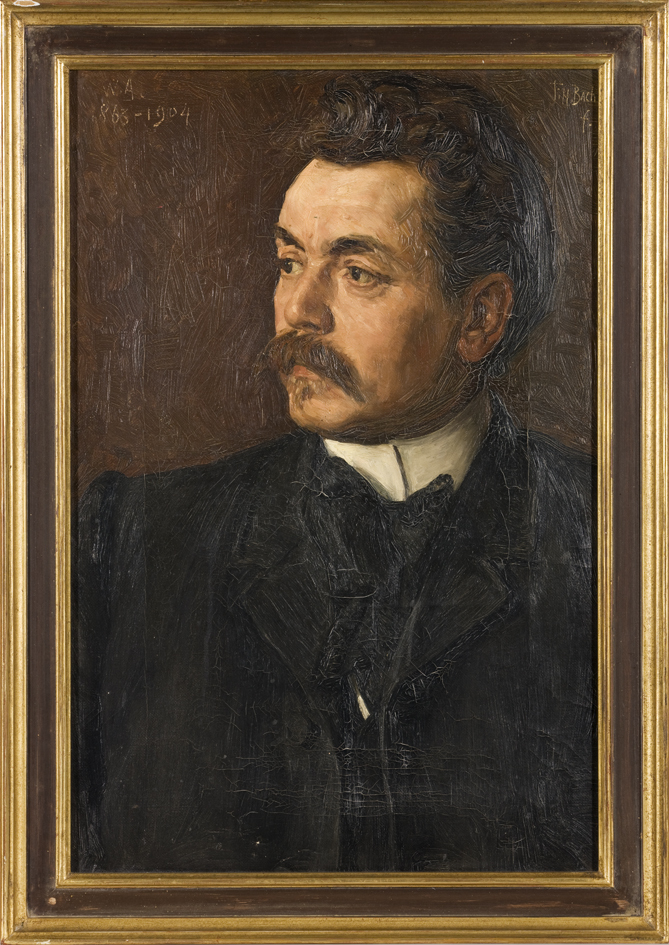
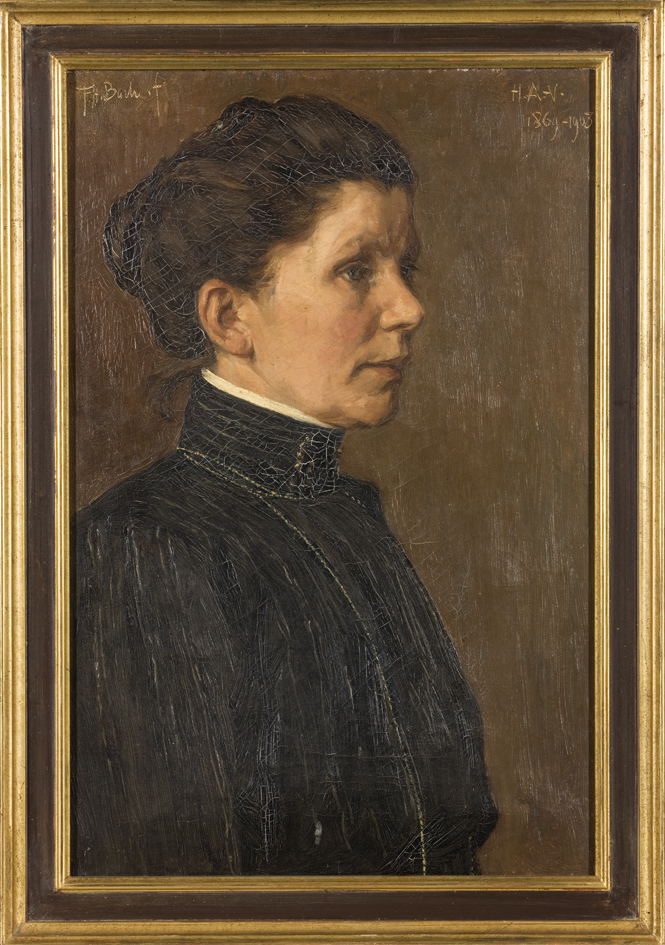
Their son Cornelius Louis became known as Cor Alons (1892–1967). He studied at Minerva from 1911 to 1913, where Bach was still teaching at the time, and then at the academy in The Hague. He became an interior architect and furniture designer; he belonged to the first generation that designed furniture and space as a single whole. He designed functional, sober furniture, tubular steel furniture and tableware, and taught for decades at the academy in The Hague.60 His furniture is now sought after by collectors.
Today there are many descendants of Louis Alons living in Groningen and elsewhere in the Netherlands. Some of them are still called Louis Alons.
There is much that we do not know. We do not know who Louis’s father was, nor exactly where he was born. We do not know whether he ever saw his mother, his sister Anna, his grandmother Babbetje or his sister Sebel again after the ship left in 1769, or whether letters went back and forth between Kleinemeer and Curaçao in which his name appeared. We do not know whether he was ever formally manumitted in Groningen, or whether his freedom came about tacitly because no one treated him as property any longer. We do not know whether he could have left if he had wanted to, or whether he ever wanted to. We do not know why four men attacked him on the public road in 1802. And we do not know how he himself looked back on a life that began as a line in a will and ended as a labourer in Kleinemeer.
What we know of Louis comes from the pens of others. A minister called him “een Neger”, an enslaver decided that he could stay “by provisie”, a clerk recorded his occupation, another minister wrote down that he generally agreed with him. His own choices can be seen in only a few places. He twice married a woman from the region. He gave his children names: Susanna, perhaps after his mother; Cornelius and Maria, after the couple who owned him; Louisa Helena, after himself. In those names, which his descendants went on passing down for another century and a half, something of him has been preserved that the archives did not record.
This story began with a single line in a baptismal register from 1779, the only time anyone wrote down his skin colour. That the minister wrote that line makes Louis visible. That it remained that one time shows that in Sappemeer, to most people, he was above all a neighbour: Star Lichtenvoort’s servant, the coachman, the day labourer from Kleinemeer, Louis.
Notes
-
Groninger Archieven, toegang 124 inv. 400, fol. 107, marriage Sappemeer, banns registered 21-8-1779, married 19-9-1779, https://www.openarchieven.nl/gra:90c7d1f8-78d2-c29f-93c5-5d70890d0cff↩
-
Groninger Archieven, toegang 124 inv. 400, p. 321, baptism Susanna, Sappemeer 19-9-1779, https://www.openarchieven.nl/gra:04a8ade9-fc12-9a27-3e0d-751070b7c464↩
-
No skin colour is given in the baptismal entries of his later children, in his children’s marriage records or in his death record (BS Sappemeer 1831, akte 19, https://www.openarchieven.nl/gra:55604dfd-d626-e5e0-6832-5c964d8db154). Sporen van het slavernijverleden in Groningen (p. 82) states that “een neger uit Curaçao” appears in both the baptismal and the marriage register; it does not appear in the marriage register.↩
-
Groninger Archieven, BS Overlijden Sappemeer 1831, akte 19: Louis Alons, died Kleinemeer 08-05-1831, https://www.openarchieven.nl/gra:55604dfd-d626-e5e0-6832-5c964d8db154 ↩↩2
-
Nationaal Archief, 1.05.12.01 (Oud Archief Curaçao), inv. 1557, akte 27, fol. 59–64 (legacy to Maria Kock on fol. 61), will of Maria Klingenburgh, 2-8-1757. The reading “Vissers” is not entirely certain. The sentence structure does not show with certainty whether Sebel was a daughter of Sambo or of Babbetje. On 19-9-1760 Maria Klingenburgh made a new will; it has not been found. ↩↩2
-
Stadsarchief Amsterdam, toegang 5075, inv. 14289, notary J.P. de Putter, akte 13 (conventie, 22-11-1766), https://www.openarchieven.nl/saa:bebf5fd5-253d-1e00-e053-b784100af734; will of Klingenburgh (see note 5): “Maria Kock, dogter van Wylen haaren Zoone Willem Webb Kock”. ↩↩2
-
R. Buzink, “Plantage Rozentak”, http://curacao.buzink.com/rozentak.htm (list of owners); L. Jongsma, Slavery Dynasty (MA thesis, RUG, 2015), p. 60–61, citing G.N. Schutter, “‘Welgelegen’ te Kleinemeer”, Groninger Volksalmanak 1956, p. 34.↩
-
Stadsarchief Amsterdam, toegang 5075, inv. 14286 and 14287, wills of Anna van Beeren: on 4-2-1759 Maria is the “huijsvrouw” [wife] of Arnold Padbrugge, on 30-12-1760 his widow.↩
-
Jongsma, Slavery Dynasty, p. 60–61.↩
-
Private deed, Curaçao [4]-9-1765, mentioned and annulled in the conventie of 22-11-1766 (see note 6).↩
-
B. Henkes et al., Sporen van het slavernijverleden in Groningen (4th edition), p. 82.↩
-
Historisch Archief Midden-Groningen, HS02-101 (archief familie Star Nauta Carsten), inv. 373, letter book of outgoing letters of Cornelis Star Lichtenvoort 1767–1778, letters of 1-7 and c. 1-9-1769. See also Henkes et al., Sporen, p. 82, and B. Henkes, “Groninger betrokkenheid bij het slavernijverleden”, Historisch Jaarboek Groningen 2019, p. 37–38 and n. 41.↩
-
R. Buzink, “Plantage Rozentak”, http://curacao.buzink.com/rozentak.htm (list of owners).↩
-
Letter book of Star Lichtenvoort (see note 12); cf. the will of 1757 (note 5).↩
-
Amsterdamse Courant 23-10-1766 (“Bovengemelde Capt. Peeper is den 28 July van Curacao gezeild met Jan Moolenhouwer”) and 25-10-1766; Rotterdamse Courant 28-10-1766 (“Den 23 zyn in Tessel gearriveert Jan Molenhouwer van Curasfou”), https://resolver.kb.nl/resolve?urn=MMKB19:000677128:mpeg21:a00001; ship’s name in the advertisement in the Amsterdamse Courant of 30-12-1766 (“‘t Schip de Vrouwe Anna Capt. Jan Moolenhouwer”).↩
-
Letter book of Star Lichtenvoort (see note 12), with, at the back, the lists of letters to and from Curaçao 1765–1778. The voyage fits the conventie of 22-11-1766 (note 6); there is no passenger list.↩
-
Rijksmonumentenregister, monument 515585 (Welgelegen, Kleinemeer), https://monumentenregister.cultureelerfgoed.nl/monumenten/515585; Schutter, “‘Welgelegen’ te Kleinemeer”.↩
-
G.N. Schutter, “‘Welgelegen’ te Kleinemeer”, Groninger Volksalmanak 1956, p. 33–37 (Delpher, MMKB26
); baptism Reijna Gesina Star Lichtenvoort, Sappemeer 16-10-1768.↩ -
Letter book of Star Lichtenvoort (see note 12), letter to fiscal Coerman, 1-7-1769, and letter to Captain Pieter Hanson, c. 1-9-1769; cf. Henkes et al., Sporen, p. 82–83. ↩↩2
-
Oprechte Haarlemsche Courant 3-10-1769.↩
-
Henkes, “Groninger betrokkenheid”, p. 38, writes that Sambo and Anna were given “de vrijheid” [freedom] before they returned. The letters themselves mention no manumission. Letters of manumission from 1769–1771 might be found in Nationaal Archief, 1.05.12.01, inv. 198–200.↩
-
Placard of the States General “omtrent de Vrijheid der Neger- en andere Slaaven, welke uit de Colonien van den Staat naar dese Landen overgebragt of overgesonden worden”, 23-5-1776, articles 1, 4 and 5, in J. van der Linden, Groot Placaatboek, deel 9 (Amsterdam 1796), fol. 526; transcription: http://de-wit.net/bronnen/histo/plakkaat_slaven-overgebracht-hier-te-lande-1776.htm↩
-
Report by the midwife “Abram Gerrijts Wedw”, Sappemeer 12-3-1776, probably in Groninger Archieven, toegang 730 (Gerechten in Selwerd en Sappemeer), inv. 1557 (aangiften 1775–1776); not digitised. Cited from Stichting Familiehistorie Westera Wilkens, https://www.westerawilkens.nl/dv-132.html. The Reformed baptismal registers of Sappemeer and Hoogezand record no baptism of this child in 1776.↩
-
Groninger Archieven, baptismal register Sappemeer: Luitje 08-04-1781, https://www.openarchieven.nl/gra:1c54c091-d143-067a-0917-d9a817036d2e; Cornelius 12-10-1783, https://www.openarchieven.nl/gra:150361c3-20f4-e741-fb90-056c36a458d7; Maria 23-09-1787, https://www.openarchieven.nl/gra:1b2b2713-bbf8-b038-cf5c-f3a65818f6b8↩
-
F. Alons, Op Zuik Noar de Woddels (1995), p. 17, cited in Jongsma, Slavery Dynasty, p. 61; Henkes et al., Sporen, p. 83. That Luitje was named after the father of Hindrikje Luitjes is inferred from her patronymic.↩
-
Groninger Archieven, toegang 124 inv. 227, baptism Hoogezand 04-09-1774, https://www.openarchieven.nl/gra:e8db468b-0c93-f1ac-a424-7ddf3603436e; Henkes et al., Sporen, p. 81.↩
-
Groninger Archieven, toegang 124 inv. 400, register of members Sappemeer (fol. 371–441), profession of faith 14-3-1784; not digitised.↩
-
Handelingen van de Representanten van het Volk van Stad en Lande (Groningen 1795), Landsdag of 3-11-1795, p. 695, https://books.google.nl/books?id=OZNaAAAAYAAJ&pg=PA695↩
-
Groninger Archieven, toegang 124 inv. 400, list of illegitimate children, baptism Hielke Derks Stomp, Sappemeer 24-5-1795, “onecht kind van Susanna Louis”, https://www.openarchieven.nl/gra:b906fd00-8884-686b-8c12-3395686320b9↩
-
Groninger Archieven, toegang 124 inv. 401, fol. 27, burial Sappemeer 30-5-1796, https://www.openarchieven.nl/gra:29fdcfcf-0c5d-82f8-45e0-ca4fe403c6c2↩
-
Groninger Archieven, toegang 124 inv. 401, fol. 41, burial Sappemeer 08-07-1799, https://www.openarchieven.nl/gra:f7cc473a-c892-9f27-95b0-596460b96f49↩
-
Groninger Archieven, toegang 124 inv. 400, fol. 121, marriage Sappemeer, banns registered 12-10-1799, married 3-11-1799, https://www.openarchieven.nl/gra:82ec3af3-dd38-08fd-3ee4-93428f2ef658↩
-
Groninger Archieven, BS Overlijden Sappemeer 1824, akte 22: Maria Touwslager, 16-7-1824, “oud acht en veertig jaren, vroedvrouw van beroep, geboren te Groningen”, https://www.openarchieven.nl/gra:6246bd63-97bc-015e-30b9-7570e19b1e14 ↩↩2
-
Groninger Archieven, baptismal register Sappemeer: Antje 17-08-1800, https://www.openarchieven.nl/gra:de474de3-7843-b0da-27c4-fb901017b66a; Louisa Helena 23-05-1802, https://www.openarchieven.nl/gra:d4681a9b-82f0-ff3d-a813-79db1ea4fca3; Jan 17-03-1805, https://www.openarchieven.nl/gra:e196d872-230b-6def-ac92-9424c10ae2f9↩
-
Groninger Archieven, toegang 730 (Gerechten in Selwerd en Sappemeer), probably inv. 1563 (aangiften en vooronderzoeken 1802–1803); not digitised. Cited from Stichting Familiehistorie Westera Wilkens, https://www.westerawilkens.nl/dv-135.html; cf. Henkes et al., Sporen, p. 83.↩
-
F. Alons, Op Zuik Noar de Woddels: een genealogisch onderzoek van de familie Alons (1995), according to Henkes et al., Sporen, p. 83.↩
-
Groninger Archieven, toegang 124 inv. 401, fol. 89, burial Sappemeer 23-9-1808, “Antje Louis”, https://www.openarchieven.nl/gra:61bcc69d-b650-551c-5636-93fbe8df0c1b; inv. 402, fol. 17, burial Kleinemeer 26-9-1808, “Antje Louis, 8 jaar, arm”, https://www.openarchieven.nl/gra:54d7cee5-a2b3-ae84-6cd7-8a7de16db282↩
-
Groninger Archieven, marriage Luitje Alons, Veendam 27-12-1813, https://www.openarchieven.nl/gra:713ddacd-31b9-7383-b57d-a2ce1b8b4a2c; marriage Maria Alons, Siddeburen 23-2-1814, https://www.openarchieven.nl/gra:bd781198-2aca-26b3-dbcc-24b7aa5f3667↩
-
Groninger Archieven, toegang 124 inv. 400, fol. 122v, marriage Sappemeer 20-3-1803, https://www.openarchieven.nl/gra:ab00987e-96c5-d9cd-ac1b-3e0cdc6f329e; marriage Siddeburen 1814 (see note 40).↩
-
Groninger Archieven, marriage Cornelius Alons, Bourtange 16-04-1812, https://www.openarchieven.nl/gra:3b1d721f-13cd-ec1f-4213-ca285e8bfa5b; Drents Archief, birth Hendrika Berendina Allons, Meppel 15-7-1812, father “kantoorbediende” [clerk], https://www.openarchieven.nl/dar:e12f836a-1d92-444b-96a7-97f2a9c68aac; remarriage of his widow, Bourtange 14-12-1814, https://www.openarchieven.nl/gra:90483422-4f5d-aaec-d42d-2b0d38dad763. His death record has not been found.↩
-
Among others Louis de Weger, born Hellum 12-6-1815, https://www.openarchieven.nl/gra:183cbe70-435c-0b73-4b5a-64b63ce5ed93; Louis Eliveld, born Kleinemeer 21-5-1818, https://www.openarchieven.nl/gra:99512d03-1a82-9239-2c3d-b6475e8d42ce; Cornelis Louis Alons, son of Luitje, born Sappemeer 30-9-1819, https://www.openarchieven.nl/gra:1f71e619-e0fe-6a81-b783-7bae7f03f4f9↩
-
Groninger Courant 18-4-1820, p. 2, https://resolver.kb.nl/resolve?urn=ddd:010773220:mpeg21:a0010, and 25-4-1820, p. 2, https://resolver.kb.nl/resolve?urn=ddd:010773222:mpeg21:a0008↩
-
Groninger Courant 26-10-1824, p. 2, https://resolver.kb.nl/resolve?urn=ddd:010774381:mpeg21:a0004; repeated 2-11-1824, https://resolver.kb.nl/resolve?urn=ddd:010774383:mpeg21:a0018, and 9-11-1824, https://resolver.kb.nl/resolve?urn=ddd:010774385:mpeg21:a0005↩
-
Historisch Archief Midden-Groningen, HS01-003, inv. 572, census Sappemeer 1825, p. 114, wijk G nr. 45, https://www.openarchieven.nl/mgr:1e351ba7-2b77-4376-b336-c7bf12895173↩
-
Groninger Archieven, marriages Sappemeer 1826, 1829 and 1830: https://www.openarchieven.nl/gra:78556638-f77c-674a-9962-c4194dd18360, https://www.openarchieven.nl/gra:315e943b-d0a0-dbe4-c620-cf7b2750be49 and https://www.openarchieven.nl/gra:6c8d0d41-b164-40ce-3f09-c060b12c4e82↩
-
Groninger Archieven, death Cornelis Louis Alons, Groningen 4-8-1826; birth Sappemeer 30-9-1819, https://www.openarchieven.nl/gra:1f71e619-e0fe-6a81-b783-7bae7f03f4f9↩
-
Drents Archief, death Jan Alons, Coevorden 08-11-1827, https://www.openarchieven.nl/dar:0fc4b22f-1138-4655-8465-5f89ee5bbff7; Groninger Archieven, toegang 1890 inv. 50, memorie van successie Jan Alons, certificate of the mayor of Sappemeer, 19-6-1828, https://www.openarchieven.nl/gra:6eb740e5-150c-48df-809e-12d2459dc75d↩
-
B. Dop and P. Visser (eds.), Ernstige godsvrucht en gezond verstand. Een selectie uit de dagboeken van Foeke Wigles Gorter (1756–1836) (Hilversum 2010), p. 274 and n. 293, https://books.google.nl/books?id=j9cfU5cqMSAC&pg=PA274. That Abraham Gerrits ten Cate was the father of Gerrit Abrams ten Cate, who married Susanna in 1826, is inferred from the names.↩
-
Kadaster, Oorspronkelijke Aanwijzende Tafel (1832), municipality of Sappemeer, sectie B, perceel 384, artikel 5: “huis & erf”, size 1 roede 61 el (161 m²), klasse gebouwd 14, belastbaar inkomen gebouwd f 9, https://oat.hisgis.nl/oat/faces/oatscans/image.xhtml?oatcode=OAT01039B012; location: minuutplan Sappemeer sectie B “de Kerk”, blad 2 (1832), north of the Winschoterdiep, https://www.beeldbankgroningen.nl/beelden/detail/17e039fb-1e01-69fa-7539-e31148f406fc/media/b3e5957e-458c-196d-f759-d4231f07a930. Kleinemeer lies in sectie D. For comparison, on the same sheet: B 385 (H.G. Heyen, arbeider, huis & erf, 80 m², klasse 15, f 6); B 370, 372, 377, 378a, 382, 389, 390 (huis & erf, 60–160 m², klasse 14, f 9); B 386, 391, 392, 395 (koopman, bakker, herbergier; klasse 5–11, f 27–90). ↩↩2
-
Groninger Archieven, toegang 1890 inv. 63, memorie van successie Louis Alons, drawn up 30-10-1831, submitted 29-11-1831, with certificate of the mayor of Sappemeer, https://www.openarchieven.nl/gra:599bd4c7-48f2-b29b-5dd0-70600c64b0e1↩
-
Groninger Archieven, BS Overlijden Sappemeer 1833, akte 43, https://www.openarchieven.nl/gra:871093d4-73bb-2f13-8846-4c947276f8f8↩
-
“Levensberigt van Mr. Cornelis Star Numan”, Jaarboek van de Maatschappij der Nederlandse Letterkunde 1858, https://www.dbnl.org/tekst/_jaa002185801_01/_jaa002185801_01_0027.php ↩↩2
-
Groninger Archieven, toegang 2097 (archief C. Star Numan), inv. 31, notes for a speech (undated), discussed in L. Jongsma, Slavery Dynasty (MA thesis, RUG, 2015), p. 67.↩
-
Adres aan de edelm. H.H. president en leden van de Tweede Kamer der St. Gen. over de afschaffing der slavernij (1848), p. 11 (“C. STAR NUMAN, Hoogleeraar te Groningen”), https://books.google.com/books?id=p47wWoKqadEC; on compensation: Henkes et al., Sporen, p. 30.↩
-
Groninger Archieven: birth Cornelius Louis Alons, Sappemeer 9-9-1833, father Luitje Alons, hatter, https://www.openarchieven.nl/gra:6c9b46bb-56af-8d3e-15c0-c6c145fa4ef0; birth Wicher Alons, Sappemeer 5-5-1863, father house painter, https://www.openarchieven.nl/gra:80632c79-5366-c6f2-f235-62bbe4f3d027; marriage Wicher Alons and Henderika Vegter, Hoogezand 3-9-1891, https://www.openarchieven.nl/gra:820e14e3-a76d-0bb0-c8b5-aef4c12eefa1↩
-
Groninger Archieven, birth Cornelius Louis Alons, Groningen 11-6-1892, https://www.openarchieven.nl/gra:53e61884-0bdf-59e3-ed58-4edfbf5ea53c↩
-
Groninger Museum, object numbers 2011.0131.A (Wicher Alons) and 2011.0131.B (Henderika Alons-Vegter), F.H. Bach, 1904, oil on canvas, https://www.collectiegroningen.nl/collectie/wicher-alons-(1863-1936)~TdeKk4NFWYmI2NZe92s2zw/ and https://www.collectiegroningen.nl/collectie/henderika-alons-vegter-(1869-1931)~s4VusC0sW6mKxu7zmsJHAw/. Bach (1865–1956) taught at Academie Minerva for 43 years.↩
-
“Cor Alons”, https://nl.wikipedia.org/wiki/Cor_Alons; Nationaal Ontwerp Archief, http://www.nationaalontwerparchief.nl/ontwerper/Alons,%20Cor↩